
❋
The South Lawn
Horizons under a canopy of clear skies and bright starsEquine-Assisted Learning is an innovative, experiential approach to personal development and education that uses the unique relationship between humans and horses to encourage meaningful learning experiences.
Through structured activities and guided reflection, participants have opportunities to develop important life skills, including communication, confidence, leadership, patience, empathy, responsibility, and emotional awareness.
One of the most valuable aspects of EAL is that it provides individuals with an opportunity to learn outside of traditional classroom or office environments. Rather than simply being told how to communicate, manage emotions, or demonstrate leadership, participants have the opportunity to practice these skills in real time.
Emerging research supports the potential of equine-assisted learning programs, particularly in the areas of social-emotional development, behavioral improvement, resilience, and self-confidence. Although additional research is needed, EAL offers a promising educational approach for children, adolescents, and adults.
Ultimately, equine-assisted learning recognizes that meaningful growth can happen through experience, connection, reflection, and the development of trust between humans and horses.
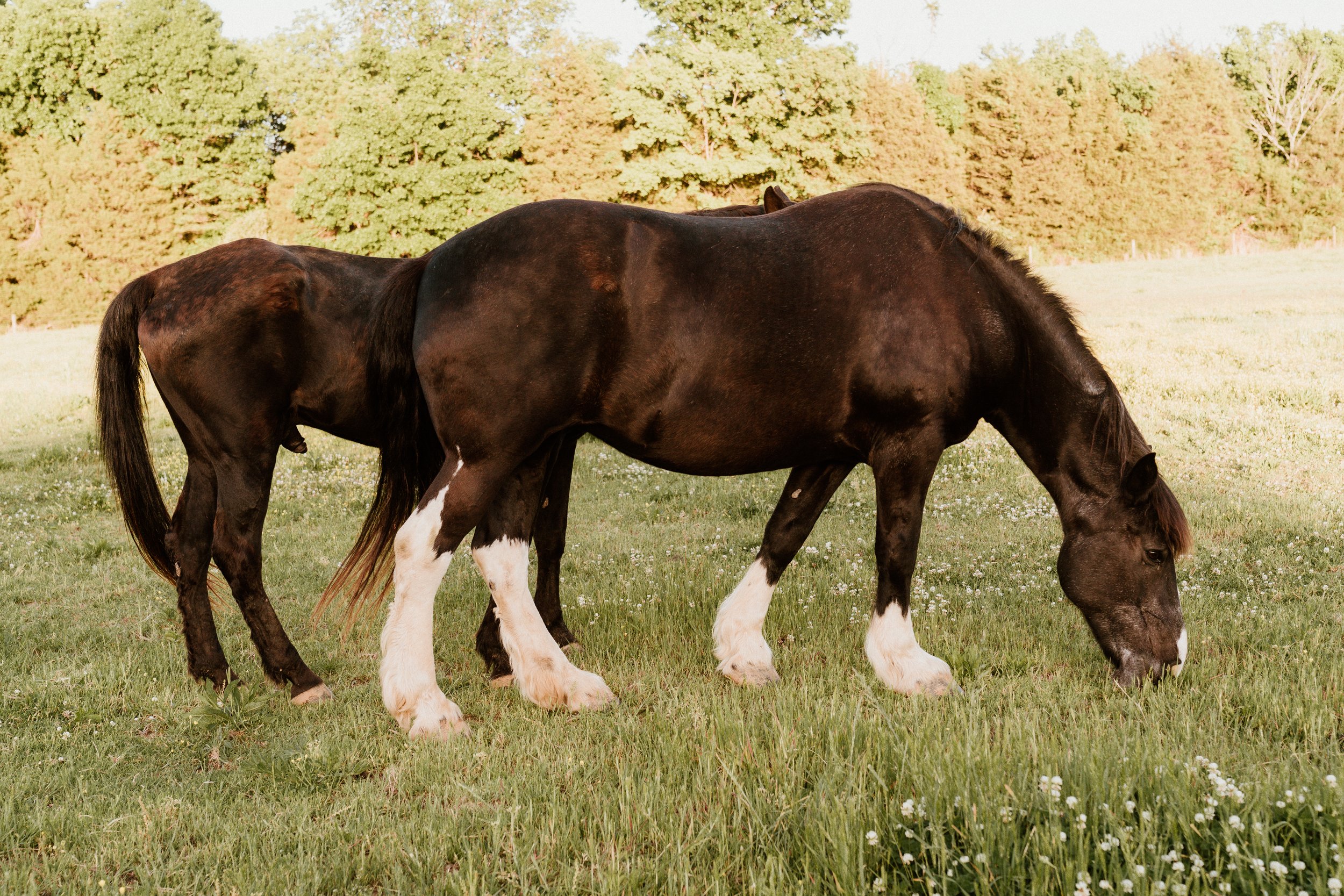
Fields of green grass in a quiet, serene ranch with blue skies and cool breezes, surrounded by forests….
❋ Private Estate AccessNo competing crowds; only the gentle breeze and birdsong accompany the agenda.
❋ Locally Sourced Table Lunch Plates arrive with artistic flare and a calming presence that facilitates healing and central somatic recognition.
❋ Guided Agronomy SessionParticipants feel soil between fingertips while learning about regenerative methods and equine assisted learning.
Each moment is thoughtfully sequenced; anticipation gives way to immersion, then to reflective delight.Reserve Your Equine Assisted Learning
Equine-Assisted Learning: Definition, Benefits, Research, and Practice
1. Definition of Equine-Assisted Learning
Equine-Assisted Learning (EAL) is an experiential, educational approach that uses interactions with horses to help individuals develop personal, social, emotional, behavioral, and life skills. It is a structured, goal-oriented learning process facilitated by trained professionals, often in collaboration with equine specialists.
Unlike traditional classroom learning, EAL allows participants to learn through direct experiences with horses. Horses provide immediate, nonjudgmental feedback through their behavior and responses, helping individuals become more aware of their emotions, communication styles, boundaries, and actions.
Equine-Assisted Learning is not the same as horseback riding or traditional therapeutic riding. Participants often work with horses from the ground, rather than riding them.
2. What Does Equine-Assisted Learning Involve?
EAL involves a variety of hands-on activities designed to encourage learning, personal growth, and skill development. Activities are selected according to the participant's age, needs, abilities, and individual goals.
Common activities include:
Grooming and caring for horses: Encourages responsibility, patience, empathy, and nurturing behaviors.
Leading horses: Develops confidence, communication, leadership, and trust.
Groundwork exercises: Participants guide horses through obstacles or activities, learning problem-solving, teamwork, and self-awareness.
Observing horse behavior: Helps participants recognize body language, emotional responses, and nonverbal communication.
Relationship-building: Encourages participants to develop trust, respect, and healthy boundaries.
Reflective discussions: Participants connect their experiences with horses to situations in their everyday lives.
These activities provide opportunities to practice skills in a safe, supportive, and structured environment.
3. How Does Equine-Assisted Learning Work?
Equine-Assisted Learning works through experiential learning, which means individuals learn by doing, observing, reflecting, and applying what they have learned.
Horses are particularly useful in this process because they are highly sensitive to body language, movement, tone, and changes in their environment. They respond to what they experience rather than judging an individual's appearance, background, or personal circumstances.
For example, a participant who struggles with confidence may initially have difficulty leading a horse. Through encouragement, instruction, and practice, the participant may learn to communicate more clearly, regulate their emotions, and develop confidence.
The learning process generally follows four stages:
Experience: The participant completes an activity with the horse.
Observation: The participant notices how the horse responds to their behavior and communication.
Reflection: A facilitator helps the participant identify what happened and what they learned.
Application: The participant considers how to use those skills in school, relationships, work, or everyday life.
This process helps turn interactions with horses into meaningful learning experiences.
4. Who Can Benefit from Equine-Assisted Learning?
Equine-Assisted Learning can benefit children, adolescents, and adults. It is especially useful for individuals who benefit from hands-on, interactive learning experiences rather than relying solely on traditional instruction.
Some populations who may benefit include:
Children and adolescents
Children who struggle with confidence or self-esteem.
Students experiencing behavioral or emotional challenges.
Children who have experienced trauma or adverse childhood experiences.
Youth who struggle with communication or social relationships.
Students who have difficulty with traditional classroom environments.
Children who need help developing responsibility, patience, and self-regulation.
Adults
Individuals seeking personal growth and increased self-awareness.
Adults experiencing stress or difficulty with communication.
Individuals working to develop leadership skills.
Veterans and first responders.
Adults seeking improved interpersonal relationships and teamwork.
Schools and organizations
EAL can also be used in:
School-based social-emotional learning programs.
Special education and alternative education settings.
Youth development programs.
Leadership and team-building workshops.
Corporate training and professional development.
Community-based programs.
The benefits will vary depending on the individual, the program, and the quality of facilitation. EAL is a non-therapy service, so it should not be presented as a replacement for professional mental health treatment.
5. Recent Research Studies on Equine-Assisted Learning
Research into equine-assisted services has expanded in recent years, with particular interest in emotional regulation, social development, trauma, self-confidence, and behavioral outcomes.
The following studies provide useful examples of the developing evidence.
Study 1: Equine-Assisted Learning for Children with Trauma and Their Caregivers (2025)
Authors: Hopson and colleagues (2025).
Purpose: This study examined whether an equine-assisted learning program could improve emotional, behavioral, and social outcomes for children who had experienced trauma.
Method: Researchers evaluated a seven-week program called Resilience Reins. Children participated in unmounted activities with horses, while caregivers were offered a separate educational and support program.
Participants: The study included caregiver-reported data from 151 participants.
Findings:
Children demonstrated improvements in emotional problems.
Improvements were reported in conduct problems and hyperactivity.
Families demonstrated improvements in family functioning.
Caregivers showed increased knowledge of parenting and child development.
Some children also demonstrated improvements in peer relationships and prosocial behavior.
Significance: This research suggests that equine-assisted learning, combined with caregiver education, may be a useful approach for supporting children and families affected by trauma.
PubMed
Study 2: Behavioral and Physiological Indicators of Stress in Horses During an Equine-Assisted Learning Program (2025)
Purpose: This research examined how horses respond behaviorally and physiologically when participating in an equine-assisted learning program involving youth with a history of trauma.
Program: The researchers studied an eight-week social-emotional learning program called Changing Leads.
Method: Youth participated in structured activities with horses designed to develop:
Self-awareness.
Social awareness.
Emotional regulation.
Personal responsibility.
Communication skills.
The program included classroom activities, groundwork, horse interactions, and reflection.
Significance: This research is important because it considers not only the potential benefits to human participants but also the stress and welfare of the horses involved. It highlights the importance of appropriate horse selection, monitoring, handling, and humane program practices.
PMC
Study 3: At-Risk Youth Receive Similar Benefits from Equine-Assisted Psychotherapy and Traditional Psychotherapy (2025)
Authors: McCrea and colleagues (2025).
Purpose: Researchers compared outcomes for adolescents receiving equine-assisted psychotherapy and traditional psychotherapy.
Participants: Ninety-four adolescents with emotional and behavioral difficulties participated.
Method: Researchers compared 29 adolescents receiving equine-assisted psychotherapy with 65 receiving traditional psychotherapy.
Findings:
Both groups demonstrated improvements in psychological, social, and emotional well-being.
Participants showed improvements in resilience and self-efficacy.
Social and emotional skills improved.
Hope and cognitive reappraisal also improved.
Overall improvements were similar between the two groups.
Significance: Although this study examined psychotherapy rather than EAL, it provides additional evidence that structured horse-related interventions may be valuable when supporting adolescents experiencing emotional and behavioral difficulties. It should not be interpreted as direct evidence that EAL produces the same therapeutic outcomes.
PubMed
Study 4: Preliminary Efficacy of an Equine-Assisted Social-Emotional Learning Program (2026)
Authors: Matlock and colleagues (2026).
Purpose: This pilot study investigated the effectiveness of a school-based equine-assisted social-emotional learning program for middle-school students with diminished social-emotional competencies.
Method: Thirty-one students from six middle schools participated in a randomized waitlist-controlled study. The program lasted eight weeks.
Findings:
Parents reported improvements in students' social-emotional competencies.
Teachers also reported significant improvements.
The waitlist group did not demonstrate the same improvements during the waiting period.
Significance: This is particularly relevant to educational applications of EAL because it provides preliminary controlled-trial evidence that a structured equine-assisted program may improve students' social-emotional skills. However, the sample was small, so larger studies are needed to establish how broadly the results apply.
Sage Journals
What Does the Research Tell Us?
Overall, emerging research suggests that equine-assisted programs may support:
Emotional awareness and regulation.
Confidence and self-efficacy.
Communication and social skills.
Resilience and personal responsibility.
Behavioral and interpersonal development.
Family relationships and social support.
However, it is important to recognize that research on EAL specifically is still developing. Some studies examine broader equine-assisted services or psychotherapy rather than learning programs. More large-scale, controlled research is needed to determine which activities are most effective, for whom, and how long benefits last.
6. How Is Equine-Assisted Learning Conducted?
Equine-Assisted Learning is typically conducted at an equestrian facility, therapeutic riding center, farm, or specialized equine learning center.
Programs may be offered individually or in groups, depending on the participants' needs and learning objectives.
A typical EAL program includes the following steps:
Step 1: Assessment and goal setting
Before beginning, facilitators identify the participants' needs and establish learning objectives. Goals might include improving confidence, communication, emotional regulation, teamwork, or problem-solving.
Step 2: Introduction to horses and safety
Participants learn basic horse behavior, safety procedures, body language, and appropriate ways to approach and interact with horses.
Step 3: Hands-on activities
Participants engage in activities such as grooming, leading, obstacle courses, and groundwork exercises. Each activity is designed to encourage a particular skill or learning outcome.
Step 4: Facilitated learning
The facilitator observes the interactions between the participant and horse, asks questions, and encourages participants to recognize how their behavior, communication, and emotions influence the experience.
Step 5: Reflection and discussion
After completing an activity, participants discuss what happened, what they learned, and how the experience relates to their personal lives.
Step 6: Applying learned skills
Participants are encouraged to use the skills they practiced with horses in their everyday lives, including at school, home, work, and in relationships.
Example of a Typical EAL Activity
Equine-Assisted Learning Prepares VSU Students for Success - Valdosta State University
The Obstacle Course Challenge
A participant is asked to lead a horse through an obstacle course without pulling or forcing the horse.
The activity encourages:
Patience and problem-solving.
Clear communication.
Confidence and leadership.
Emotional self-regulation.
Trust and boundaries.
Afterward, the facilitator asks questions such as:
What did you notice about the horse's response?
How did you feel when the horse did not respond as expected?
What did you do to overcome the challenge?
How could you apply this experience to a situation at school or home?
This allows participants to connect their experience with the horse to real-life situations.
7. Who Facilitates Equine-Assisted Learning?
Successful EAL programs require professionals who understand both human learning and horse behavior.
Depending on the program, the team may include:
Equine-assisted learning facilitators: Develop activities and guide the learning process.
Equine specialists: Ensure appropriate horse handling, safety, and horse welfare.
Educators: Connect activities to educational goals and social-emotional learning.
Mental health professionals: May collaborate when participants have additional emotional or behavioral support needs.
Facilitators should have appropriate training in experiential learning, horse behavior, group facilitation, and risk management. Programs should also have emergency procedures, appropriate horse-to-participant ratios, and individualized safety considerations.
It is important to distinguish EAL from equine-assisted psychotherapy. Psychotherapy must be facilitated by appropriately licensed mental health professionals working within their professional scope of practice.
PATH International+1
8. References and Additional Resources
These sources provide further information about EAL, professional standards, terminology, and current research.
1. Wood, W., et al. (2021). Optimal Terminology for Services in the United States That Incorporate Horses to Benefit People: A Consensus Document. Journal of Alternative and Complementary Medicine. Read research article.
2. Hopson, L. M., et al. (2025). Equine-Assisted Learning for Children with Trauma and their Caregivers. Journal of Child & Adolescent Trauma. Read research study.
3. Behavioral and Physiological Indicators of Stress in Horses During an Equine-Assisted Learning Program for Youth with a History of Trauma (2025). Read research article.
4. McCrea, C., et al. (2025). At-Risk Youth Receive Similar Benefits from Equine-Assisted Psychotherapy and Traditional Psychotherapy. Read research study.
5. Matlock, S., et al. (2026). The Preliminary Efficacy of an Equine-Assisted Social-Emotional Learning Program for Youth with Diminished Social-Emotional Competencies. Read research study.
6. Professional Association of Therapeutic Horsemanship International (PATH Intl.). Optimal Terminology for Equine-Assisted Services. Professional standards and definitions.
7. Utah State University. Equine-Assisted Learning. Program overview and educational resources.